Big-box vs. strip mall parking lots: why the count methodology differs
A vehicle count on a parking lot sounds like one number. It isn't, and the difference matters the moment you try to tie that number to a specific tenant's comps.
The single-tenant pad site is the clean case
A freestanding big-box, a Target, a Lowe's, a standalone grocery anchor on its own parcel, gives you one lot and one tenant. Every car in that field belongs to that store's traffic, full stop. There's no cross-parking easement to account for, no adjacent restaurant pulling spaces at dinner, no mall employee parking bleeding into the count from a neighboring pad. You count the stalls, you count the cars, and the resulting series maps straight to that single-tenant pad site's own reported same-store sales trend. This is why pad sites are the easiest asset type to build a footfall proxy on: the parking field and the tenant are the same thing.
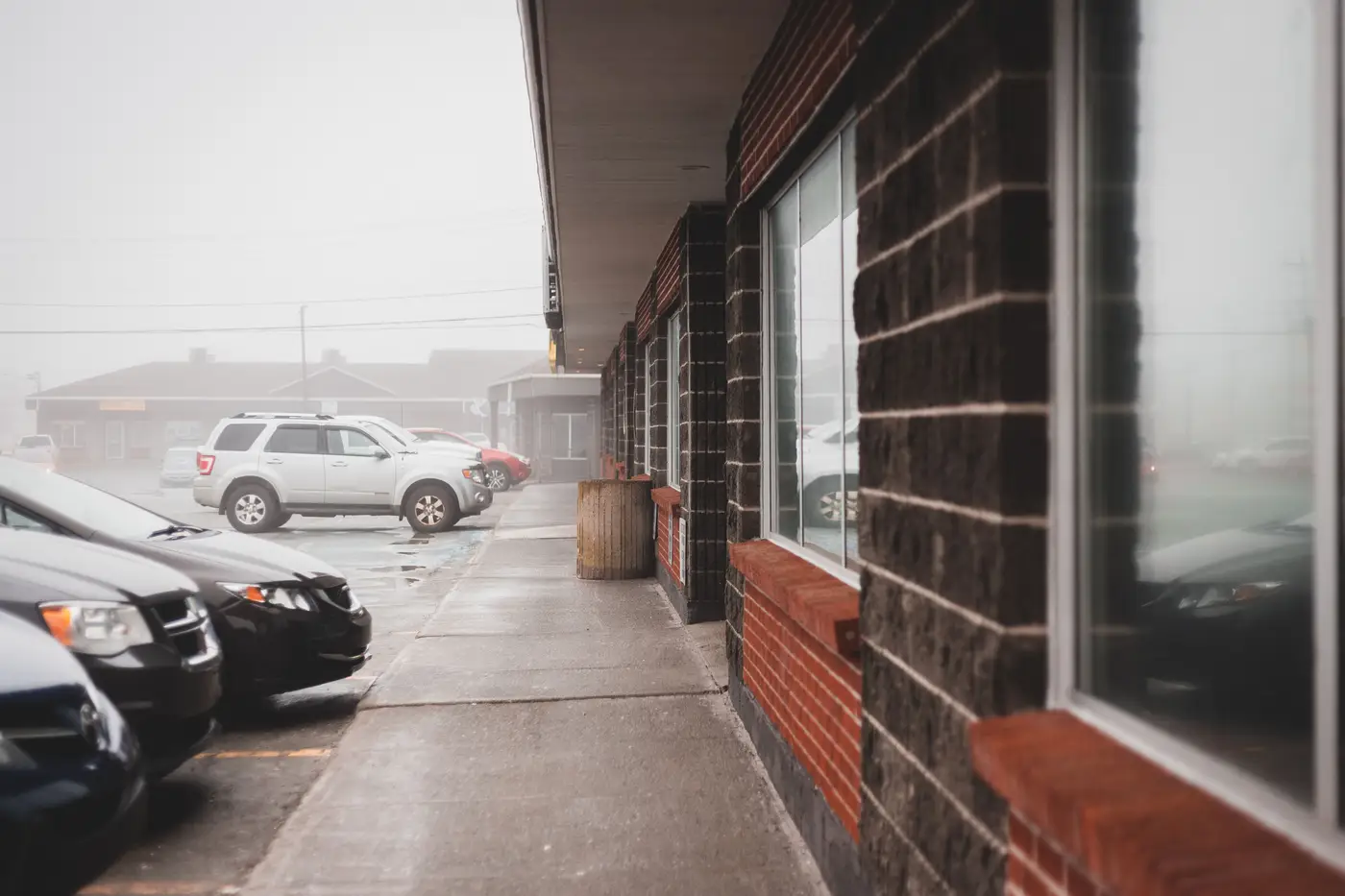
Strip malls and power centers don't give you that. A typical strip center shares one parking field across six, ten, sometimes twenty tenants under a CAM agreement, and the lot itself doesn't know which car belongs to the nail salon versus the anchor grocer versus the fitness tenant that packs the lot at 6 a.m. and empties by 8. A raw count of the whole field tells you the center is busy. It doesn't tell you whether the anchor is driving that traffic or whether a new restaurant three doors down is pulling the numbers.
Isolating the anchor in a shared lot
Anchor tenant isolation in a shared lot comes down to geography, not just counting. The anchor almost always occupies a disproportionate share of the building footprint and sits adjacent to the largest, most clearly bounded section of the parking field, usually the spaces directly in front of its entrance and the first few rows out. A count run against that sub-area of the lot, rather than the full parcel, gets you much closer to an anchor-specific read, especially at a big-box grocery or discount anchor where the drive-up pattern (early morning, late afternoon) is distinct from a mall's late-morning and weekend-driven mix.
It's not perfect. Shared lots mean some bleed at the margins no matter how you draw the boundary, and a center with angled or shared drive aisles makes it harder to split cleanly than a center with separate curb cuts for the anchor and the inline shops. The methodology difference is the point: a pad site hands you a tenant-level number straight off the count, no boundary work needed, while a shared lot requires drawing a boundary around the anchor's section before the count means anything specific to that lease.
What this means for the comps calendar
For an analyst building a quarterly model, this changes what you can claim and when. A single-tenant pad site count is a direct footfall proxy you can chart against that tenant's own reported comps without much qualification. A shared-lot count against a center anchor is a proxy for the anchor's section of the field, best read as a trend line rather than a precise match to the anchor's reported numbers, and best cross-checked against the center's known tenant mix before you draw conclusions about which retailer is driving the traffic.
A daily occupancy read indexed over time carries more weight for shared lots than for pad sites. A pad site count is informative on any given day, on its own. An anchor isolated out of a shared field needs the shape of the trend across several weeks before the series earns much confidence; one day's count in a shared lot just doesn't say much by itself.
If you're tracking a tenant that sits on its own parcel, the count methodology is straightforward and the series is close to turnkey. If you're tracking an anchor buried in a shared center lot, the boundary drawn around that anchor's parking section is doing most of the analytical work, and it's worth knowing how that boundary was set before you put the series next to a reported comp number.
Parking Lot Counts builds that per-site occupancy series, pad or anchor, so you've got a read on the lot before the tenant reports its own.